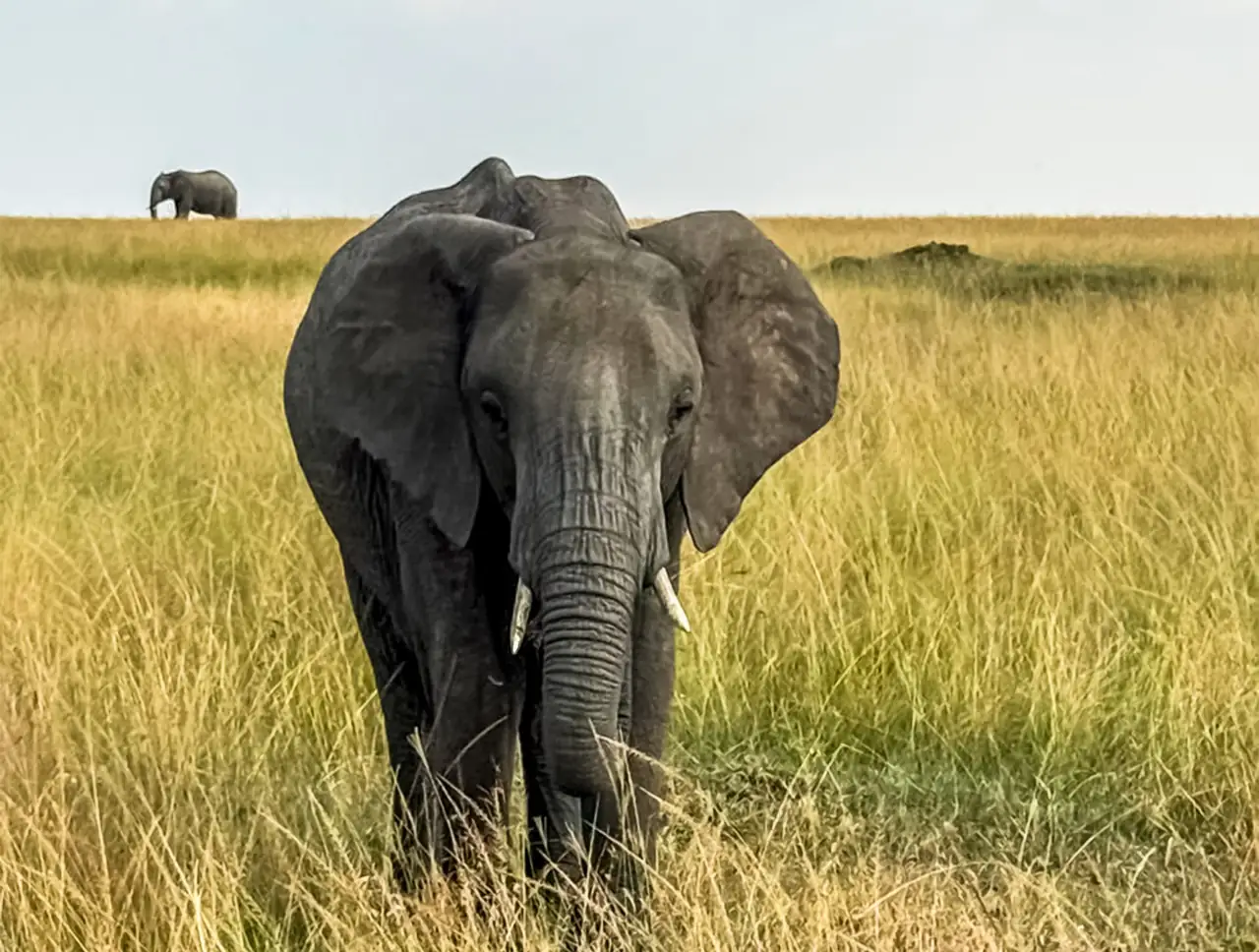
You think you know what an elephant looks like. Most of us grew up seeing them in documentaries, zoos, picture books — a familiar shape, a familiar sound, a fact you've known since childhood. None of that is quite the same as the moment one steps out of the tree line, in open space, moving at its own unhurried pace, with nothing between you but distance.
Scale changes everything
There's no enclosure fence to give you a sense of proportion, no glass to remind you where you stand relative to the animal. It's just space, and the elephant fills more of it than you expected. Even a calm, distant elephant carries a kind of presence that's hard to describe until you've felt it yourself — something closer to weather than wildlife, a shift in the atmosphere of the whole area rather than just a sighting to note.
The ears, the size of the footprints left behind, the sheer unhurried confidence of the walk — all of it reads differently at that scale and that proximity than it ever does through glass or a screen.
There's also a kind of self-possession to a wild elephant that a captive one never quite has, and it's hard to put your finger on why until you've seen both. It isn't performing for anyone or waiting on a schedule. It's simply going about its own business in a landscape that belongs to it far more than it belongs to any of us watching from a vehicle nearby.
The quiet says more than words would
What we remember most isn't a fact or a detail — it's the way the whole vehicle went quiet at once, without anyone asking for it. Conversations that had been running easily all morning just stopped. Cameras that had been clicking constantly went still for a moment before anyone remembered to use them. That reaction, repeated trip after trip for different travelers, tells you something these animals do to people regardless of how many nature documentaries they've watched beforehand.
It changes how you see the rest of the trip
After that first sighting, something shifts in how the rest of the safari feels. The checklist mentality — spot this animal, photograph that one — starts to matter less than it did that morning. You start paying closer attention generally, because you now know firsthand that the difference between 'seeing an animal' and actually experiencing one is enormous, and worth slowing down for.
- Put the camera down for the first minute or two and just watch
- Notice the sounds as much as the sight — the environment usually reacts too
- Ask your guide about the individual animal if they know it; many do
- Expect the moment to feel bigger than you prepared for, and let it
It's the kind of first encounter that ends up defining the whole trip in hindsight, even if it happens on the very first drive. Everything that follows gets measured a little against that first quiet, startled reaction — and very little else on the trip quite matches it, no matter how many more sightings follow.
It's worth preparing yourself for, a little
We don't say that to overhype it or set an impossible bar. It's more that it helps to know, going in, that the reaction is likely to be stronger than you'd guess from photos and stories alone. Travelers who go in expecting 'a nice animal sighting' sometimes seem almost thrown by how much it actually affects them — and that reaction is worth being ready for rather than surprised by.
If there's one piece of advice we'd give a first-time safari traveler specifically about this moment, it's simply: let it be a big deal. There's no need to underplay it or rush past it toward the next stop on the drive. It earns the reaction.